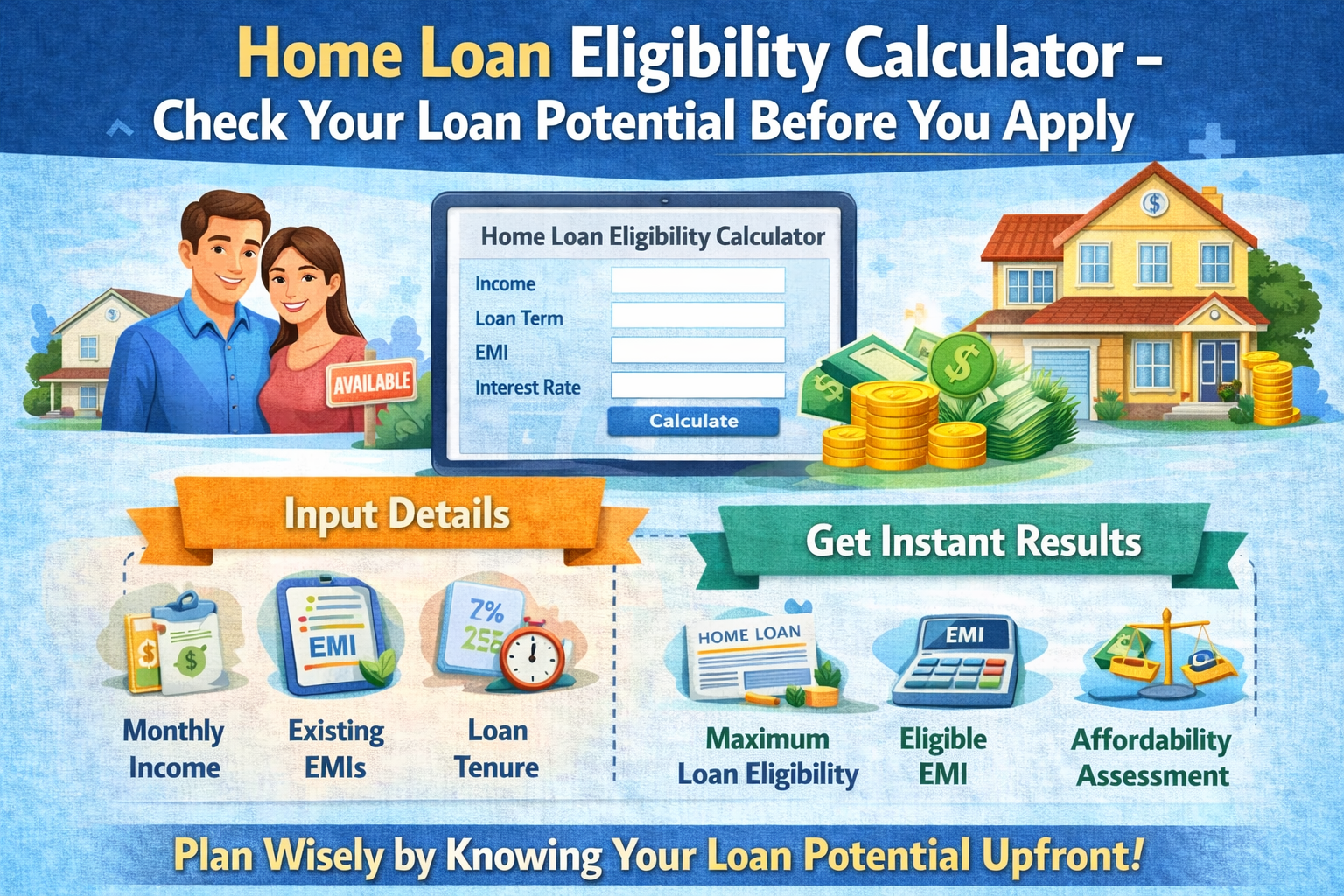
Buying a home is not always about finding the “perfect” property first. Sometimes, the smarter starting point is understanding what you can realistically afford… and that is exactly where a home loan eligibility calculator becomes useful. Before you start visiting sites or comparing floor plans, it helps to know how much a lender may be willing to offer you based on your income, existing commitments, and repayment capacity.
Think of it this way… You might have your dream home in mind, but your actual loan eligibility depends on a mix of financial factors that lenders evaluate carefully. A calculator gives you a practical estimate within minutes, so you can plan your budget with more confidence. It also helps you avoid guesswork, especially when you are trying to balance your monthly expenses with your expected home loan EMI.
More importantly, using a home loan eligibility calculator early can save you time during the application process. You will know where you stand, what may need improvement, and what loan amount range makes sense before you submit your documents.
What is a Home Loan Eligibility Calculator?
A home loan eligibility calculator is an online tool that estimates the loan amount you may qualify for based on details like your monthly income, age, loan tenure, interest rate, and existing liabilities.
The result is not a final approval (because lenders still verify documents), but it gives a reliable indication of your borrowing capacity.
Many people also refer to it as a home loan eligibility calculator—and yes, the spelling varies online, but the purpose stays the same.
Why Use a Home Loan Eligibility Calculator Before Applying?
Using a calculator may seem like a small step, but it can make your planning far more structured.
It helps you:
- estimate your possible loan amount quickly
- understand whether your expected EMI fits your monthly income
- plan a realistic property budget
- compare different loan tenures and interest rates
- prepare for documentation and approval stages
Imagine if you find a property you love, pay the booking amount, and only then realise the loan eligibility is lower than expected… that is exactly the kind of situation this tool helps you avoid.
Home Loan Eligibility Criteria – What Lenders Usually Check
When lenders evaluate eligibility, they do not focus only on salary. They assess multiple aspects to determine repayment stability.
The key home loan eligibility criteria generally include:
- Monthly income (net take-home for salaried applicants)
- Age (since it impacts loan tenure)
- Employment type (salaried/self-employed)
- Work stability and experience
- Existing EMIs and loan obligations
- Credit score and repayment history
- Loan tenure requested
- Home loan interest rate applicable at the time
Think about it like this… lenders are not only checking if you can pay today, but whether you can comfortably pay for years to come.
How the Calculator Estimates Your Loan Amount
A home loan eligibility calculator works by applying lender-style logic, usually based on EMI affordability. Most lenders ensure that your EMI stays within a reasonable percentage of your monthly income.
Here is what it typically considers:
- income minus existing liabilities
- EMI-to-income ratio
- tenure and expected interest rate
- repayment capacity based on age
Once these inputs are processed, the tool estimates a loan amount that aligns with your expected repayment ability.
How Home Loan EMI and Interest Rate Affect Eligibility
Your eligibility and EMI are closely linked.
- A higher home loan interest rate increases EMI, which can reduce your eligible loan amount
- A longer tenure reduces EMI, which can improve eligibility (but increases total interest)
- A shorter tenure increases EMI, which may reduce eligibility, even if your income is stable
So in many cases, eligibility improves not because income increases, but because the EMI becomes more manageable.
Home Loan Documents – What You Will Need Later
Even if you are only using the calculator now, it helps to know what lenders will ask for when you apply.
Typical home loan documents include:
- PAN card and Aadhaar card
- passport-size photographs
- salary slips (3–6 months) / ITR (2–3 years)
- bank statements (usually 6 months)
- employment proof or business proof
- property papers (agreement, allotment letter, title documents)
These are also commonly referred to as documents required for home loan processing, and having them ready early makes the process smoother.
How to Improve Eligibility Before Applying
If your eligibility result is lower than expected, do not panic. Small adjustments can make a difference.
You could try:
- clearing a small ongoing loan/credit card outstanding
- increasing tenure slightly (to reduce EMI pressure)
- applying with a co-applicant (spouse/earning family member)
- improving credit score over a few months
- avoiding multiple loan enquiries at the same time
Income stability/low liabilities – both matter, and both influence your eligibility more than people realise.
Home Loan Tax Benefits – A Useful Advantage to Know
A Home Loan can also offer financial benefits under the Income Tax Act, subject to applicable rules.
Some common home loan tax benefits include deductions on:
- principal repayment (under Section 80C)
- interest paid (under Section 24(b))
These benefits can reduce your taxable income, making home ownership more financially efficient over time.
(And yes… this is one reason many buyers prefer taking a home loan instead of paying the full amount upfront.)
Summary – Use the Home Loan Eligibility Calculator to Plan Confidently
A home loan eligibility calculator is one of the simplest tools you can use before applying for a Home Loan. It helps you estimate your borrowing range, understand how home loan EMI and home loan interest rate influence affordability, and plan your purchase based on realistic numbers. It also gives you clarity about the home loan eligibility criteria lenders usually follow, and prepares you for the paperwork stage by highlighting the home loan documents and documents required for home loan approval.
Before you take the next step, spend a few minutes checking your eligibility. It is a small effort… but it can make your entire home buying journey far more organised and confident.